
Anonymous Bitcoin Transactions
Bitcoin transactions are publicly recorded forever, making complete anonymity impossible by default. Learn why Bitcoin is traceable, how blockchain analysis works and how privacy-focused techniques such as CoinJoin can significantly improve transaction privacy.
Are Bitcoin Transactions Anonymous?
One of the most common misconceptions about Bitcoin is that every transaction is anonymous. In reality, Bitcoin is pseudonymous. Wallet addresses are not directly linked to names, but every transaction is permanently stored on a public blockchain that anyone can inspect.
Blockchain explorers allow anyone to view transaction amounts, wallet balances and transaction history. With enough information, blockchain analysis can often associate multiple addresses with the same owner, making transaction history significantly more transparent than many users initially expect.
This is why many users searching for anonymous Bitcoin transactions, private Bitcoin payments or send Bitcoin anonymously are actually looking for ways to improve transaction privacy rather than hide transactions completely.
How Anonymous Bitcoin Transactions Become Harder to Trace
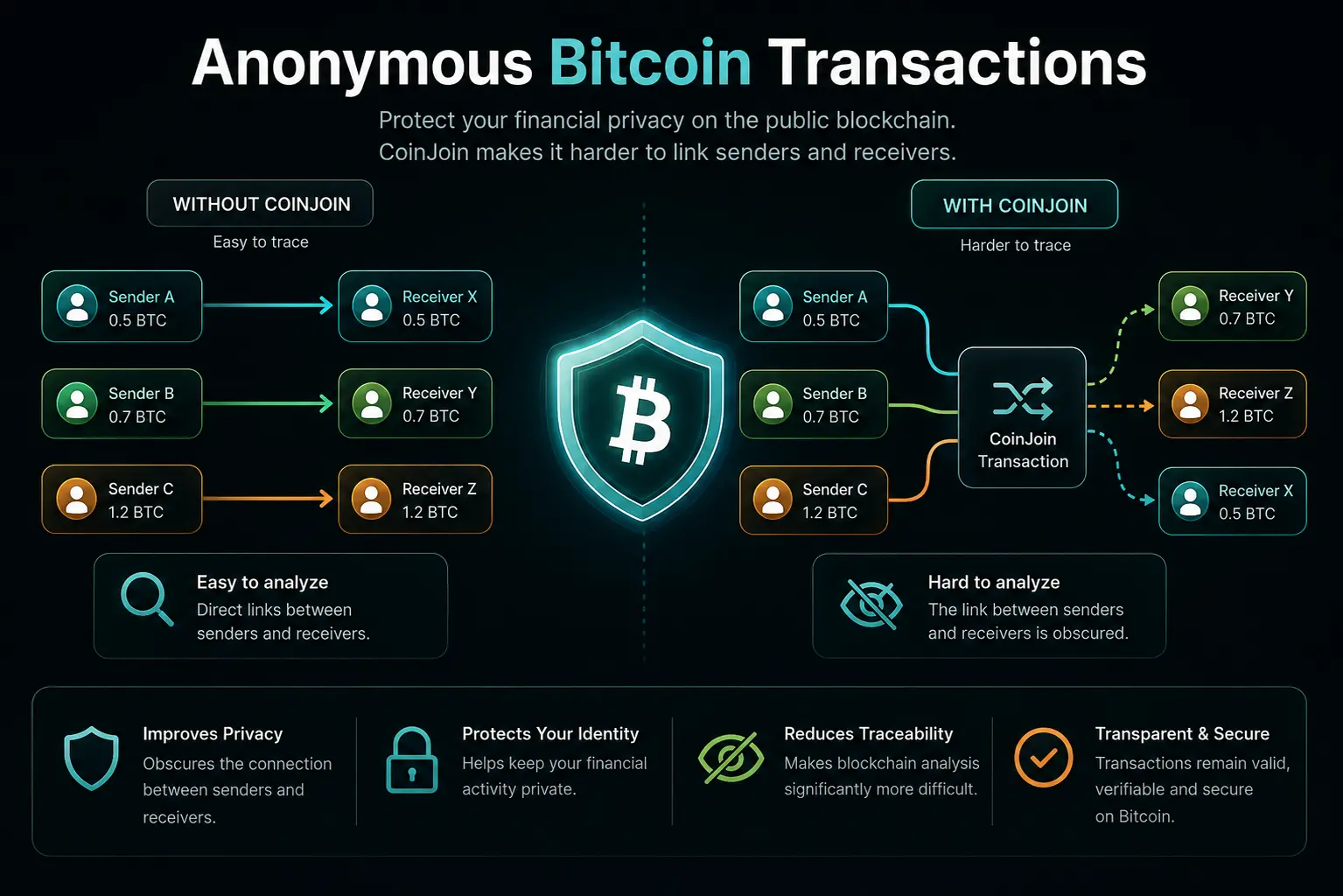
Every Bitcoin payment creates permanent on-chain data. While no personal information is stored directly on the blockchain, analysis techniques can reveal relationships between transactions and wallets.
- All Bitcoin transactions are publicly visible.
- Wallet address reuse makes ownership analysis easier.
- Transaction graphs reveal relationships between wallets.
- Exchange withdrawals and deposits may reveal additional links.
- Advanced blockchain analysis combines multiple heuristics.
For these reasons, improving transaction privacy requires reducing the amount of information that can be inferred from publicly available blockchain data.
How Can You Improve Bitcoin Privacy?
While no technology can make Bitcoin completely anonymous, several best practices can significantly reduce transaction traceability.
| Privacy Practice | Benefit |
|---|---|
| Use a fresh receiving address | Reduces wallet linkage |
| Avoid address reuse | Limits transaction clustering |
| Use CoinJoin | Improves transaction privacy by combining multiple participants |
| Separate personal and business wallets | Reduces financial exposure |
These practices cannot remove information already published on the blockchain, but they can make future transaction analysis considerably more difficult.
How Helps Improve Transaction Privacy
provides a simple workflow designed for users who want to improve Bitcoin transaction privacy. By using modern CoinJoin techniques, multiple participants collaborate within the same transaction, making deterministic ownership analysis significantly more challenging.
Every transaction includes transparent fees, live status tracking and a unique transaction reference, allowing users to monitor progress from deposit detection through completion.
Improve Your Bitcoin Privacy
Create your Bitcoin transaction in less than one minute, monitor every stage in real time and take advantage of modern privacy techniques designed to reduce blockchain traceability.
Mix BTCAnonymous Does Not Mean Invisible
No privacy technology should be considered a guarantee of complete anonymity. Bitcoin remains a transparent public ledger, and every transaction is permanently recorded on-chain. Privacy-focused techniques work by reducing the amount of information that observers can reliably infer, not by removing blockchain data.
Understanding this distinction helps users make informed decisions about Bitcoin privacy while maintaining realistic expectations about what modern privacy technologies can achieve.
Learn More About CoinJoin
CoinJoin is one of the most widely used techniques for improving Bitcoin transaction privacy. Learn how collaborative transactions work, why they reduce blockchain traceability and how they differ from traditional Bitcoin mixers.
If you're new to Bitcoin privacy, our complete CoinJoin guide explains the technology, common terminology and how modern privacy workflows operate.